Neuro physiotherapy
Movement, balance, strength and walking — the core of neuro-developmental rehabilitation.
Neuro Rehabilitation Centre · Lalitpur
Personalized physiotherapy, rehabilitation, speech therapy, autism intervention and behaviour therapy (ABA) — all under one roof.
Conditions we treat
Walk Nepal is a dedicated neuro rehabilitation centre. If a condition affects how someone moves, communicates, learns or manages daily life, there is usually something we can do — and the first step is an assessment.
Not sure whether we can help? Read more about the conditions we treat or ask us directly — describing the difficulty is enough to start.
Therapies under one roof
Families usually need more than one kind of therapy, and coordinating them across the city is exhausting. At Walk Nepal the therapists share a plan and a room, so progress in one area supports the next.
Movement, balance, strength and walking — the core of neuro-developmental rehabilitation.
Fine motor skills, hand function and the everyday tasks of dressing, eating and school.
Speech clarity, understanding, feeding and communication — including non-verbal children.
For children overwhelmed or under-responsive to touch, sound and movement.
Structured programmes for infants and toddlers, started as soon as a delay is noticed.
Applied behaviour analysis for autism — building skills, routines and self-regulation.
Learning support that fits the child, planned alongside school and family routines.
Therapy that looks like play, because that is how children practise without resisting.
Neuro rehabilitation
Neurological recovery is slow work, and it is real work. We measure it in the things that come back: sitting unsupported, holding a spoon, saying a name, walking to the gate.
Early intervention
Early identification and treatment of developmental delay is critical. The sooner a child receives support, the greater the chance of improvement in language, motor coordination and cognitive function.
Waiting to "see if it passes" costs time that a child can use. If something feels off, book an assessment.
How it works
The logo shows four figures climbing — from a wheelchair to a run. That is the shape of the work here, and it is the shape of how we run every case.
A full session to understand the condition, watch how the body actually moves, and hear what matters most to you.
Which therapies, how often, and what we are aiming for first. Written down, in plain language.
Hands-on sessions with your own therapist, plus the exercises and routines to keep going at home.
Regular re-assessment against your goals. When something stops working, the plan changes.
Why families choose us
Led by specialised neuro physiotherapists, with therapists trained for each discipline we offer.
Sessions are engaging and fun. A child who enjoys therapy comes back and keeps improving.
Individual treatment plans. No two children with cerebral palsy need the same programme.
Current neuro-developmental therapy methods, kept up to date rather than fixed a decade ago.
You learn what we do and why, so the work continues at home — where most of the hours are.
Describe what you have noticed. We will tell you honestly whether we can help.
Ask usInside the centre
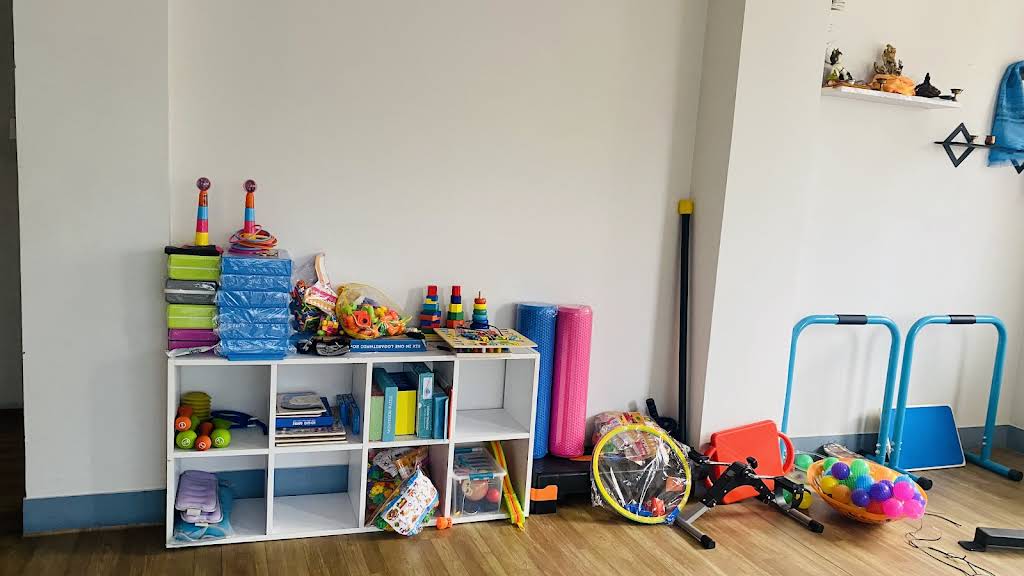
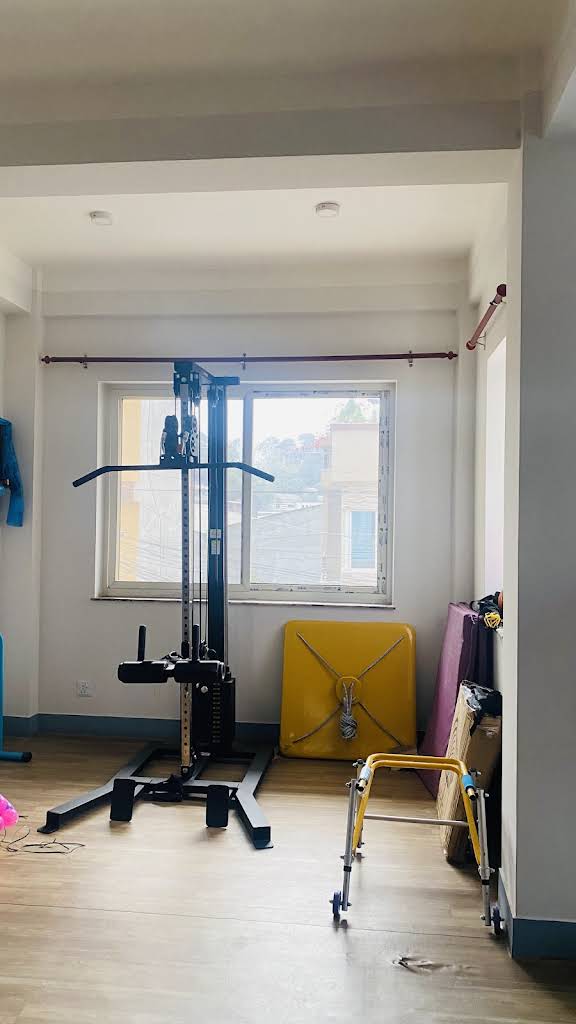
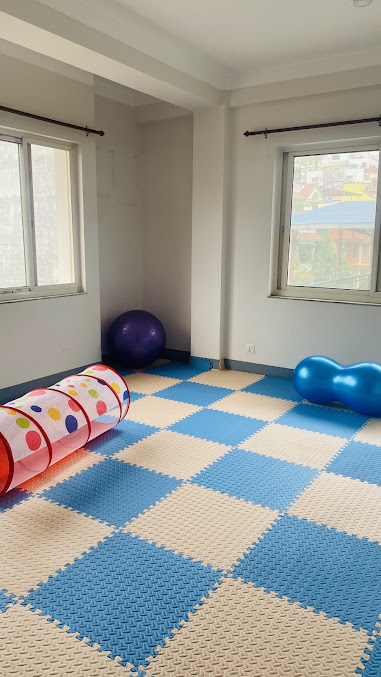
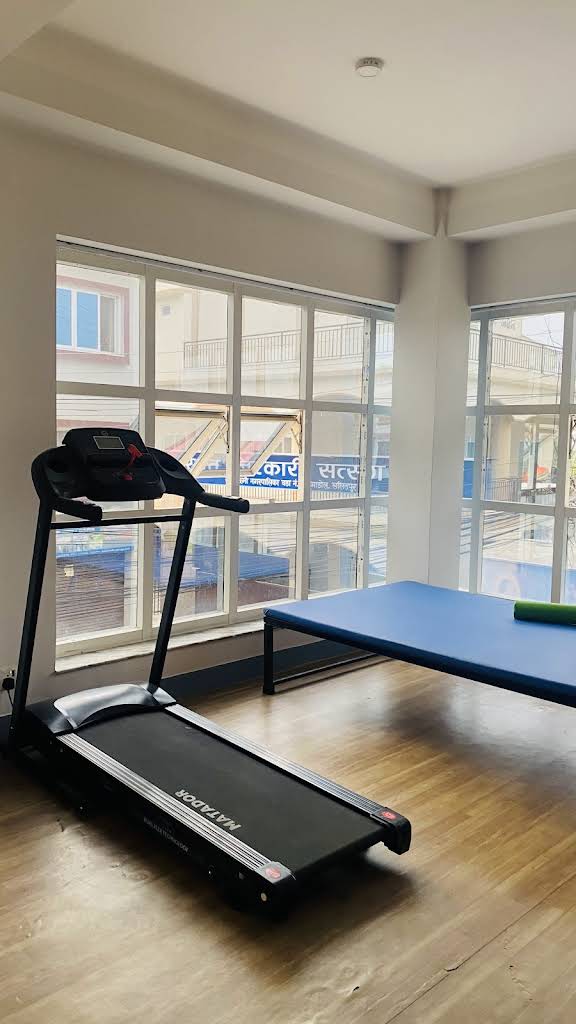
Equipment for children and adults, in one clean, organised therapy space in Lalitpur.
Book an assessment
Whether you’re recovering from a neurological condition, injury, or seeking support for your child’s development, we’re here to guide you on every step of your journey.
Questions parents ask
In children: cerebral palsy, global developmental delay, autism spectrum disorder, ADHD, intellectual disability, Down syndrome and muscular dystrophy. In adults: stroke, brain and spine injury, movement disorders, neuropathy, myopathy, motor neurone disease and orthopedic rehabilitation.
As soon as you notice a delay. Early identification and treatment matter — the earlier a child receives support, the greater the chance of improvement in language, motor coordination and cognitive skills. We assess infants, toddlers and school-age children.
No. You can book an assessment at Walk Nepal directly, without a referral. If your child or family member needs medical input alongside therapy, we will tell you what to do next.
The first visit is a full assessment and usually takes 45 to 60 minutes. Follow-up sessions are typically 30 to 45 minutes, one-to-one with your therapist. How often you come depends on the treatment plan.
Yes. Parent education and support is part of how we work. You are welcome to stay, and your therapist will show you the exercises and routines to continue at home between sessions.
We are in Lalitpur, opposite Santa Nirankari Bhawan, in the Kathmandu Valley. Open Sunday to Friday, 7 AM–6 PM, and Saturday 9 AM–5 PM. Call 9840705523 or message us on WhatsApp to book.
Visit us
We are in the Kathmandu Valley and see families from Lalitpur, Kathmandu and Bhaktapur.